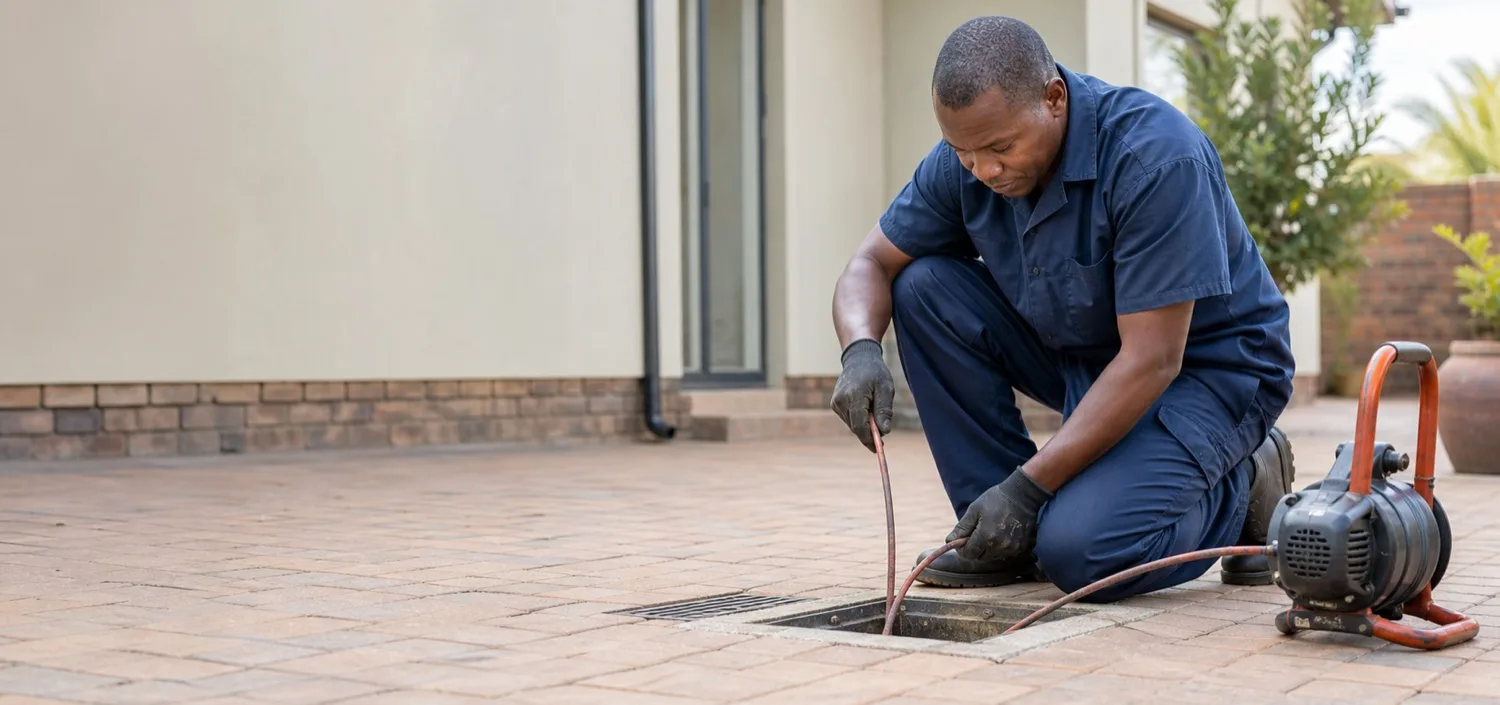
Outside drain overflowing
Common after a main drain or sewer line blockage. Photos help show severity and access.
Urgent drain and sewer blockage help
Toilet backing up, outside drain overflowing, kitchen sink draining slowly, bad smells near the drain, or water coming up through a shower? Send a WhatsApp request with your Kroonstad area and photos so the blockage can be routed quickly.
Send a photo of the drain or toilet that is backing up.
Right now
A blocked drain gets worse with use, not with time. Most of the damage people deal with afterwards happens in the first few minutes, while the household carries on running water into a system that has nowhere to put it. If a drain or toilet is backing up as you read this, the order below matters more than who you eventually call.
No more flushing, no dishwasher, no washing machine, no showers. Every litre added has to surface somewhere, and usually it chooses the lowest drain in the house.
One person flushing a toilet at the wrong moment can undo everything. Tell everyone, and if the property is shared or tenanted, put a note on the affected bathroom.
Move bathmats, towels, boxes and anything stored on the floor of the affected room. Sewage water damages more than clean water and is far harder to make safe afterwards.
Find the drain cover or inspection eye in the yard and look at whether it is running or standing full. That single observation tells a technician more than a description of the indoor symptoms.
Caustic drain chemicals are a poor choice for a fully blocked line. They sit in standing water instead of reaching the blockage, and they turn that standing water into something hazardous for whoever has to open the pipe. Repeated hard plunging on a blocked sewer line is similarly unhelpful, and on older pipework it can turn a blockage into a break. If the water is not moving at all, stop and get it looked at.
Treat any contact with sewage water as a hygiene matter: keep children and pets out of the area, wash hands and clothing thoroughly, and disinfect surfaces once the water has gone.
Fast triage
A blocked drain can turn from inconvenient to messy quickly. Slow draining water, gurgling sounds, bad smells, overflowing outside drains and toilets that will not flush properly are all signs that the blockage may be getting worse. The sooner the symptoms are described, the easier it is to route the right help.
Common after a main drain or sewer line blockage. Photos help show severity and access.
Usually urgent, especially for homes, rentals, schools, shops and offices.
Grease, food waste and pipe buildup can cause recurring kitchen blockages.
Smells can point to blocked traps, sewer issues, venting problems or stagnant water.
Services
Different blockages need different tools. A kitchen sink blockage may be caused by grease buildup. A bathroom drain may be blocked by hair, soap residue or scale. An outside sewer drain may need rodding, jetting or a more serious inspection if roots, collapsed pipework or repeated blockages are involved.
Outside drains are often the first place a serious blockage becomes visible. If water or waste is coming up from an inspection drain, the main line may be blocked. This can affect toilets, showers, basins and kitchen drains at the same time, especially when the blockage is downstream from the house.
Useful details include whether one fixture is blocked or the whole property is affected, whether the outside drain is overflowing, and whether the blockage happens repeatedly. Repeated blockages may point to tree roots, poor pipe fall, old pipework or a damaged section.
A toilet that rises, gurgles or will not flush properly is often more urgent than a slow sink. If a toilet backs up into a shower or floor drain, the blockage may be in a shared waste line. Bathroom drains can also block from hair, soap, small objects, scale or buildup in older pipes.
For homes, rentals, schools, clinics, offices and shops, a bathroom blockage can quickly become a hygiene problem. If more than one bathroom fixture is affected, mention that in the first WhatsApp message because it changes the likely cause and urgency.
Kitchen blockages are often caused by grease, food waste, soap residue and buildup in the trap or waste line. A slow kitchen sink may still drain for a while before it blocks completely. Bad smells from the sink or water coming back up after washing dishes can mean the blockage is close by or further down the line.
Restaurants, takeaways, guest houses and busy family homes can have higher risk because kitchens work harder. If the property is commercial or food-related, include that context so the lead can be routed properly.
Drain problems are easier to understand when the plumber can see what is happening. You do not need to send anything unpleasant. A photo of the affected drain, toilet, sink, outside inspection point or water level is usually enough. A short video can show whether water is backing up, bubbling or draining slowly.
A once-off blockage can happen from an object, grease, paper buildup or normal use. A blockage that keeps coming back may need deeper fault finding. Repeated sewer blockages can be caused by roots, damaged pipes, poor slope, old clay pipes, collapsed sections or misuse of drains.
If you have paid to clear the same drain before, mention when it was last cleared and how long the fix lasted. That information helps decide whether this is a simple unblocking job or a recurring drain issue that may need inspection and a longer-term repair plan.
Some drain problems can wait a short while, but others should be treated as urgent. If sewage is overflowing outside, if a toilet is unusable, if more than one drain is backing up, or if a business bathroom is affected, it is better to send the request quickly. Waiting can make the mess worse and can turn a simple blockage into a hygiene problem.
For rental properties, shops, schools, clinics, offices and food businesses, timing matters because other people depend on the bathroom or kitchen working. For homes, it may depend on whether there is another working toilet or whether the blockage is affecting the whole property. Mention those details in the first WhatsApp message so the lead can be prioritised correctly.
Also avoid opening drain covers or handling contaminated water if it is unsafe. A photo from a distance, plus a clear description of the problem, is usually enough for the first step.
Whose pipe is it?
This is the question that decides who pays, and it catches people out constantly. As a general rule in South African towns, the property owner is responsible for the drainage on their own erf up to the connection with the municipal sewer, and the municipality is responsible for the main line beyond that point. In Kroonstad that main line falls under Moqhaka Local Municipality. Confirm the detail with them, since boundaries and procedures do vary.
Blocked toilets, basins, baths and kitchen lines, the gully outside the kitchen, and the pipework running across the property to the boundary. Tree roots and collapsed pipe inside the erf are the owner’s problem even though neither feels like anyone’s fault.
The sewer main in the street or servitude, manholes on public land, and blockages that are backing up several properties at once rather than only yours.
Ask the neighbours. If only your house is affected, the problem is almost certainly on your side. If several properties are backing up together, or a manhole in the street is overflowing, that is a municipal matter and should be reported to them directly.
There is a practical reason to work this out before booking anyone. If the blockage turns out to be in the municipal main, a private callout cannot lawfully clear it and you will have paid for a visit that ends in a phone call. Checking your own inspection eye and asking two neighbours takes a few minutes and can save the whole callout.
If you are a tenant, report it to the landlord or agent as well as arranging help, and keep the photographs. Responsibility between owner and tenant is usually set out in the lease, and a dated photograph of a drain that was already failing is worth having.
Local property types
Blocked drains affect different Kroonstad properties in different ways. A home may have one toilet out of action. A rental property may need urgent help before tenants complain. A shop or office may need a bathroom working for staff and customers. A school, clinic, takeaway or guest property may have stricter hygiene and timing needs.
That is why the first message should include context. A slow kitchen sink can often wait longer than an overflowing outside sewer drain. A blocked business bathroom may be more urgent than a slow shower. Clear details help avoid wasted back-and-forth and make it easier to route the request to the right person.
Service areas
Availability depends on the job and technician schedule, but common service areas include central Kroonstad, nearby residential areas, business properties, rentals and surrounding Free State towns where blocked drains and plumbing callouts are common.
Free tool
One slow basin and a yard full of sewage are different jobs. Tick which fixtures are backing up and find out whether it is a trap, your main line, or the municipal sewer.
Questions
Multiple fixtures backing up, an outside inspection drain overflowing, sewer smells, toilets gurgling and water coming up in a shower can all point to a main-line or sewer blockage.
Chemicals may help very minor buildup, but they often do not solve serious blockages and can be unsafe. If water is backing up or overflowing, professional unblocking is usually safer.
Grease, food waste, soap residue and pipe buildup are common. Repeated kitchen blockages may need the trap and waste line cleared properly.
Send the affected drain, sink, toilet, outside inspection point or water level. Do not send unsafe or unpleasant close-ups if a wider photo explains the problem clearly.
Usually, yes. It can become a hygiene issue and may affect several fixtures. Mention whether toilets, showers or sinks are also backing up.
Costs depend on the severity of the blockage, access, equipment needed, after-hours timing and whether the main sewer line is affected. Send photos and mention whether toilets, showers or outside drains are backing up.
Yes. Requests can include outside drains, sewer smells, toilet backups, slow sinks, shower drains, inspection chambers and stormwater drainage issues. Clear photos help separate urgent sewer problems from slower drainage faults.
Send a WhatsApp request with the affected drain, area and urgency so it can be routed quickly.